
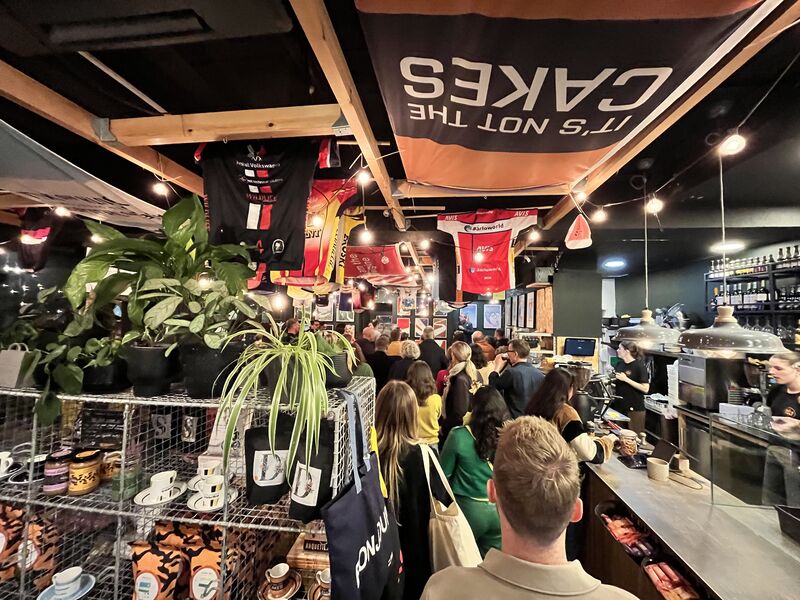
Southern Creative Catalyst began with a conversation between Ed Gould and Fred Basset. Here, the two founding Co-Conspirators talk about where the idea came from, the people who helped shape it, and why they believe the Central South’s creative economy deserves a much bigger voice.
Southern Creative Catalyst did not begin with a formal launch, a committee or a finished plan. It began with a shared frustration.
Ed Gould and Fred Basset had both spent years working with creative people, businesses and organisations across the region. Both were Fellows of the RSA. Both believed deeply in the economic and social value of creativity. And both had started asking the same question: why did a region with so much creative talent still feel so disconnected?
The Central South was full of outstanding work, ambitious businesses and talented people, but too often that work was happening in separate pockets. The quality was there. The energy was there. What seemed to be missing was a stronger sense of connection, visibility and collective confidence.
So Ed and Fred started pulling people together. They called themselves Co-Conspirators, not founders in the conventional sense, because the ambition was never to build something that belonged to two people. The idea was to start a conversation, invite others in and see what might happen if enough like-minded people decided to help.
We spoke to Ed and Fred about how Southern Creative Catalyst began, how Jo Stark became a vital part of its development, why so many others now deserve credit, and what they hope the movement might become.
Ed Gould: It began with a frustration. Fred and I could both see extraordinary creative work happening all around us. There were brilliant agencies, designers, filmmakers, developers, artists, architects, technologists, marketers, founders and freelancers doing genuinely excellent work across the region, but when you stepped back and looked at the bigger picture, it felt fragmented.
People were often working in their own pockets. They knew the people immediately around them, but not necessarily the person doing something brilliant twenty miles away. At the same time, when people talked about the major creative regions of the UK, the Central South was not always part of that conversation. That bothered us because we knew what was here.
The problem was never a lack of talent. The problem was that too much of it was happening without enough connection or visibility.
Fred Basset: I think we were both asking the same question from slightly different perspectives. What might happen if more of these people knew each other?
Not in a forced networking sense. We were not interested in creating another room where everyone turns up, swaps business cards and goes home. We were interested in what happens when people with ideas, skills, experience and energy start finding one another more easily.
That felt like the missing piece.
“The problem was never a lack of creative talent. The problem was that too much of it was happening without enough connection or visibility.”
You are both Fellows of the RSA. How important was that connection?
Fred Basset: Very important. Ed and I already shared a belief that creativity matters far beyond the creative industries themselves. It helps businesses grow, drives innovation, shapes places and creates jobs and opportunity.
The RSA’s work around Creative Corridors helped put a clearer frame around something we were already feeling. The idea that creative economies become stronger when people, businesses and places are better connected made immediate sense to us.
When we looked at that work, and then looked at our own region, we honestly found it difficult to understand why the Central South did not have a stronger presence in the conversation. We knew the work was here. We knew the businesses were here. We knew the people were here.
So rather than complain about it, we decided to start doing something.
Ed: That is the part that mattered to me. We could have spent years talking about what was missing, but at some point you have to ask what you are actually prepared to do about it.
So Fred and I started pulling together people who seemed to share the same frustration and the same ambition. We did not know exactly what the answer was. We just knew we wanted to get good people into the same room and start the conversation.
That is probably where the idea of being Co-Conspirators came from. It felt much more like us than calling ourselves founders or directors. We were conspiring, in the best possible sense, to make something happen.
What happened when you started bringing people together?
Ed: The response was what gave us confidence that there might be something in the idea. People did not just agree with us. Some of them immediately wanted to get involved.
We would talk about the lack of connection, the challenge of visibility, the difficulty of finding support and the feeling that the region’s creative economy did not always have the voice it deserved, and people would recognise all of it.They were living those challenges themselves.
Fred: That was the real test. You can convince yourself that your own idea is good, but the more important question is whether other people see something in it too.
We found that they did. More than that, some people wanted to help shape it. That is when Southern Creative Catalyst started to become more than a conversation between Ed and me.
“We started the conversation, but the idea became real when other people decided to put their own energy into it.”
Ed: Jo came in after Fred and I had started those initial conversations, and he quickly became vital to the development of the idea and the programme.
He brought experience, relationships and a deep understanding of innovation, universities, business and regional development. More importantly, he got involved. He helped turn conversations into activity, helped shape the thinking and brought his own perspective to what we were trying to build.
I would absolutely describe Jo as one of the founding Co-Conspirators. Fred and I started the conversation, but Jo became an important part of helping turn more of that conversation into action.
Fred: Jo was one of those people who understood the potential very quickly. He did not stand on the sidelines and comment on the idea. He added to it.
That matters because good ideas change when good people get involved. They become better, broader and less about the people who started them. That is exactly what happened here.
Fred: I do not think we have ever thought about it like that, and I hope we do not.
Of course, there has to be enough structure to make things happen, but the last thing we wanted was to create something closed, rigid or over-organised. We wanted people to feel that they could shape it.
That is why the language of Co-Conspirators matters. It says that this is something people can join in with. It suggests shared intent, shared energy and a bit of mischief, which feels much closer to how SCC has actually developed.
Ed: Exactly. I use the word movement carefully because it can sound grand, but I think it describes the ambition better than network, membership organisation or events programme.
Southern Creative Catalyst is a growing group of people who believe the creative economy here deserves more recognition, more connection and more support. The organisation itself matters less than the activity around it.
Are people meeting? Are they collaborating? Is great work becoming more visible? Are opportunities being created? Are more people getting involved and making things happen? That is what really matters.
Ed: A lot. I have spent much of my career working on projects where the central question is how you help people, organisations and places make progress.
At Carswell Gould, that often means helping businesses find clarity, communicate better and grow. Through Venturefest South, I have also spent years seeing what happens when you create the right conditions for innovators, businesses, universities, investors and support organisations to find one another.
The biggest lesson is that progress often starts with connection. Someone meets the right person. An introduction changes the direction of an idea. A business discovers support it did not know existed. Two people realise they should be working together.
That experience absolutely shaped Southern Creative Catalyst. I kept looking at the creative economy and thinking, why are we not doing more of this here? Why are we not connecting creative businesses more deliberately with one another, but also with the wider world of innovation, investment and regional growth?
Creative businesses should not be sitting in a separate room talking only to other creative businesses. We should be part of the bigger conversations about technology, skills, growth, investment and the future of the region.
Fred: The RSA has remained an important part of the story. The Creative Corridors work gave us a useful frame for the idea, but the relationship has gone further than that.
The RSA has helped support and promote activity around SCC, and it is also connected with research that we hope will help us understand the creative economy in our region much better.
That matters because enthusiasm only gets you so far. We all believe the creative economy is important, and we can all point to brilliant businesses and talented people, but if we want more recognition and more investment, we also need evidence.
Ed: We need to understand the scale of the sector, where the clusters are, where the gaps are, what creative businesses need and what is holding growth back.
We know the talent is here. The next step is building the connections, the confidence and the evidence to make a stronger case for it.
“We know the talent is here. Now we need the connections, the confidence and the evidence to make the rest of the country take notice.”
Ed: A lot of people, and this is probably one of the most important parts of the story. Fred and I started pulling people together. Jo became a vital part of shaping and developing the idea. But more and more people have since given their time, energy, contacts and enthusiasm to help make things happen.
People such as Natalie Haigh, Damian Demban, Chloe Burrell, Wendy Wyatt and Nisha Haq are all part of that growing group, alongside many others.
You will meet them at events. You will see them helping shape ideas. Some will host. Some will speak. Some will make introductions. Some will help quietly behind the scenes. Some will spot an opportunity and simply get on with it. They are Co-Conspirators too and we want more and more to get involved.
Fred: That is the part I find really encouraging. People are starting to see SCC as something they can help shape, rather than simply something they attend.
That was always the hope. We did not want to build something behind closed doors and then present a finished product to everyone else. We wanted to create the spark and see who else would bring energy.
Now more people are doing exactly that.
“The best sign that an idea is working is when people stop asking for permission and start making things happen.”
Fred: A very important one. The Catalyst is powered by the community itself, but community activity still needs support. People give time. They help run events. They open doors. They offer venues. They share contacts and help bring the right people together.
We have also received funding from Hampshire County Council and support from the RSA, Venturefest South, Carswell Gould, Lateral Edge and the University of Winchester.
Those contributions have helped get things moving.
Ed: I think there is an important distinction between supporting something and owning it.
We are hugely grateful to the organisations and people who have helped, but the long-term value of Southern Creative Catalyst will come from the community itself. The people in it, the ideas they bring and the things they decide to make happen.
Ed: Yes. We wanted the events to be simple and useful.
A MEET is about creating the conditions for people to find one another. Good conversations, useful introductions and unexpected connections.
A MAKE is more about putting work and ideas into the room. Show what you are working on. Share an experiment. Demonstrate something. Ask a question. Find the person who can add something.
Fred: The two formats do different jobs, but they support the same ambition.
MEET helps people find each other. MAKE helps people see what is possible.
You need both. A strong creative economy depends on relationships, but it also needs visibility, exchange and a sense of what other people are doing.
What are you ultimately trying to achieve?
Fred: I want the Central South to be recognised properly for the creative economy it already has and the one it could build.
I want creative businesses to feel more connected. I want people to find collaborators more easily. I want more opportunities to stay in the region, and I want creative people to feel that there is a home for them here.
Ed: I want people outside the region to look at the Central South and understand that serious, world-class creative work happens here.
I want businesses here to buy from the talent around them. I want policy makers, funders and investors to understand the economic value of creativity. I want young people to see that they can build brilliant creative careers here. And I want the people already doing the work to feel more confident about the collective strength of what they represent.
The ambition is big, but I do not think it is unrealistic. The raw material is already here. The people are here, the work is here and the ideas are here.
Our job is to connect more of it.
Ed: I hope more people become Co-Conspirators.
Not because we need an audience. Because we need participants. Come to something. Bring an idea. Share your work. Host an event. Make an introduction. Help someone. Tell us what is missing. Start something.
I do not want people to look at SCC and ask what Fred, Jo and I are building. I want them to look around and realise how many people are already helping to build it.
Fred: The hope is that this becomes bigger than all of us. That different parts of the region start connecting more easily, that more people create activity, that more businesses become visible and that the creative economy develops a stronger collective voice.
And, over time, I would love the Central South to be recognised as one of the best places in the country to build a creative business.
Ed: Fred and I started with a conversation because we believed something was missing, Jo got involved. Then others did too. Now there is a growing group of Co-Conspirators helping turn the idea into something real that can add value to the community and showcase why this region commercial creative clout.
That is the story so far. The hope is that many more people become part of what happens next.